About Chase
I’m a Bay Area soon-to-be Associate Marriage & Family Therapist, expressive arts practitioner, and lifelong educator. I hold an A.B. from Princeton University and an M.A. in Counseling Psychology with a specialization in Expressive Arts Therapy from the California Institute of Integral Studies (CIIS), and I completed a yearlong practicum at YouthPoint Health, offering individual and family therapy.
I believe healing can be both deeply meaningful and lighthearted. My approach draws on relational, somatic, psychodynamic, narrative, and expressive arts approaches. I'm interested in how our experiences live not only in our stories, but also in our sensations, relationships, patterns, and ways of moving through the world. Art, movement, and other experiential practices can offer ways to explore what words alone sometimes cannot. My formal trauma-focused training has emphasized emotional safety, containment, pacing, and finding the right distance from difficult experiences so that deeper exploration remains manageable.
Before becoming a therapist, I spent six years coaching students and individuals in writing, self-expression, and confidence. I also have a background in theater, education, community organizing, and social justice research. These experiences shape how I practice: I'm interested in what matters to you, the strengths you already carry, the environments that have shaped you, and the possibilities you want to move toward.
As a queer, nonbinary person, I strive to approach each person with cultural humility, openness, and respect for how you make meaning of your lives.
Ultimately, I hope therapy can be a place where you feel safe enough to be honest, supported enough to take risks, and free to discover possibilities you couldn't yet imagine. You don't have to know exactly where you're going before we begin. We can start wherever you are.
How I Work
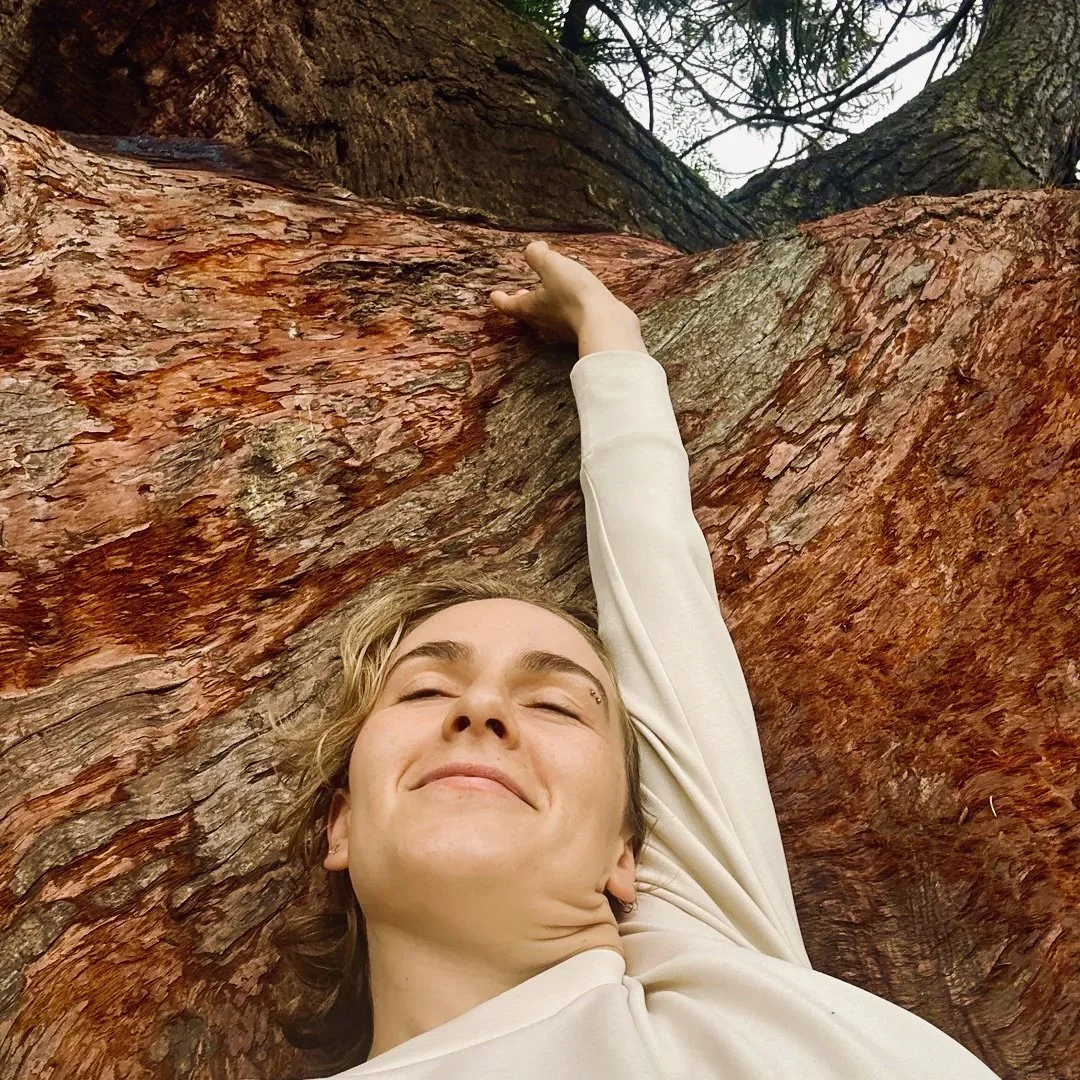
I don't believe there's one right way to do therapy. My approach is collaborative, relational, and responsive to who you are and what you need. Sometimes healing means finding words for something you've never said aloud. Sometimes it means noticing what happens in your body, experimenting with a different response, making something, or discovering a new way to understand an old story.
Connection before technique. I want to understand your world before deciding what might help. Therapy works best when we build a relationship where you can be honest, curious, and fully yourself.
Creativity beyond conversation. Words are powerful, but they're not the only way we make meaning. Drawing, writing, metaphor, movement, and other expressive practices can help us approach experiences that are difficult to explain.
The body matters. Mindfulness and body awareness can help us notice patterns, emotions, and sensations that may otherwise go unnoticed. We can explore these experiences at a pace that respects your boundaries and capacity.
Your strengths are part of the picture. I want to understand not only what hurts, but also how you've survived, what brings you alive, what you care about, and what you want to build.
Context matters. Our experiences are shaped by relationships, culture, identity, and the systems we live within. I aim to approach each person with cultural humility and respect for the complexity of their life.
Above all, I want therapy to feel like a place where you can explore seriously without having to take yourself too seriously all the time.
Healing Beyond Words
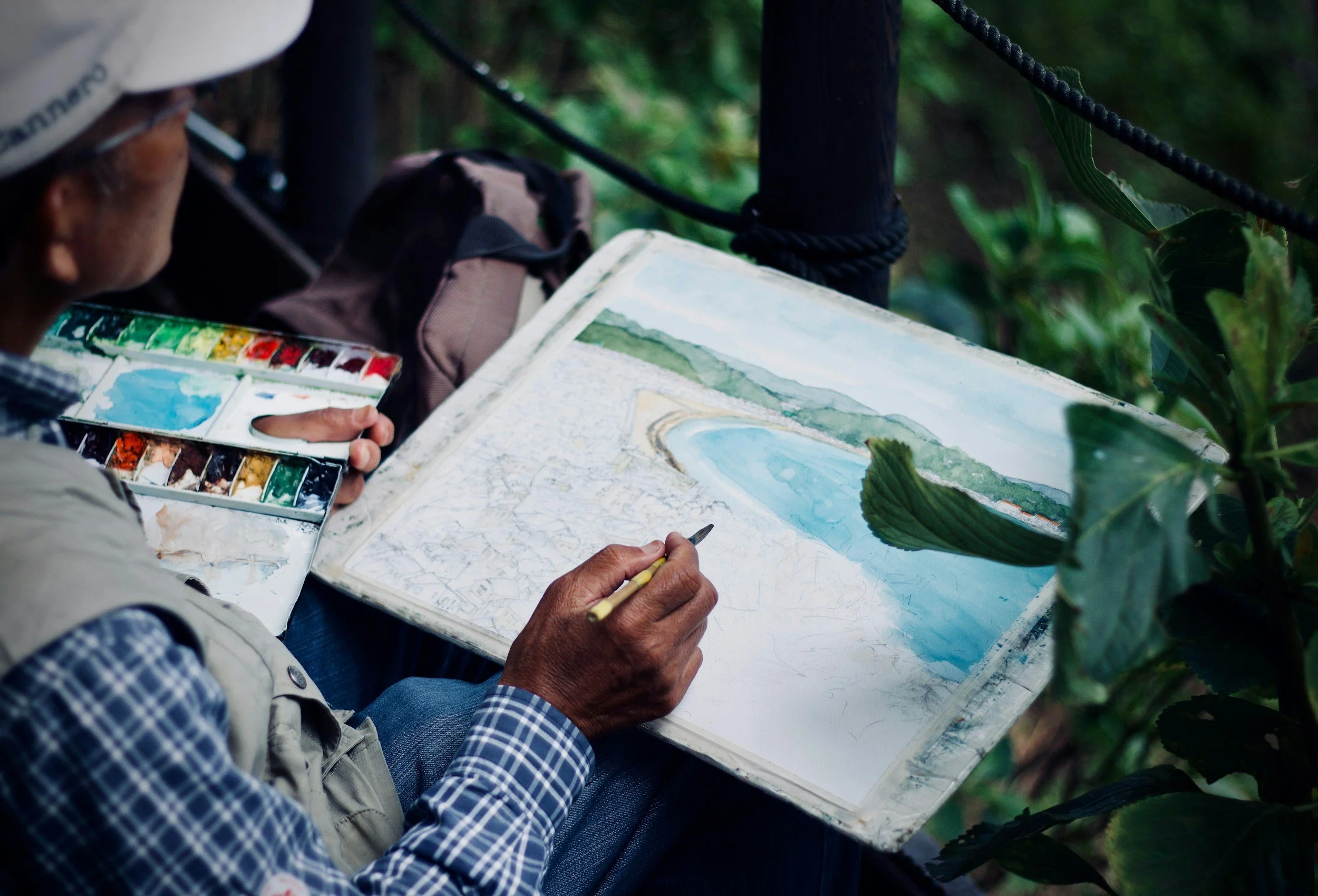
I've spent much of my life around theater, writing, education, and creative expression. Those experiences have shaped my belief that creativity isn't just something we do for fun; it can also help us explore who we are, communicate what feels difficult to say, and discover possibilities we couldn't see before.
My graduate training in Expressive Arts Therapy taught me to work with creative processes in a trauma-informed way, paying attention to safety, emotional containment, sensory experience, and how close or distant an activity brings someone to difficult material.
In therapy, creativity doesn't mean you need to be an artist. You don't need to know how to draw, write poetry, dance, or make anything beautiful. We can use images, stories, movement, metaphor, music, or simple experiments to get curious about your experience. You can also choose to work entirely through conversation.
The goal isn't to make good art. It's to create more ways to listen to yourself, make meaning, and find a path forward.
People Don't Exist in a Vacuum
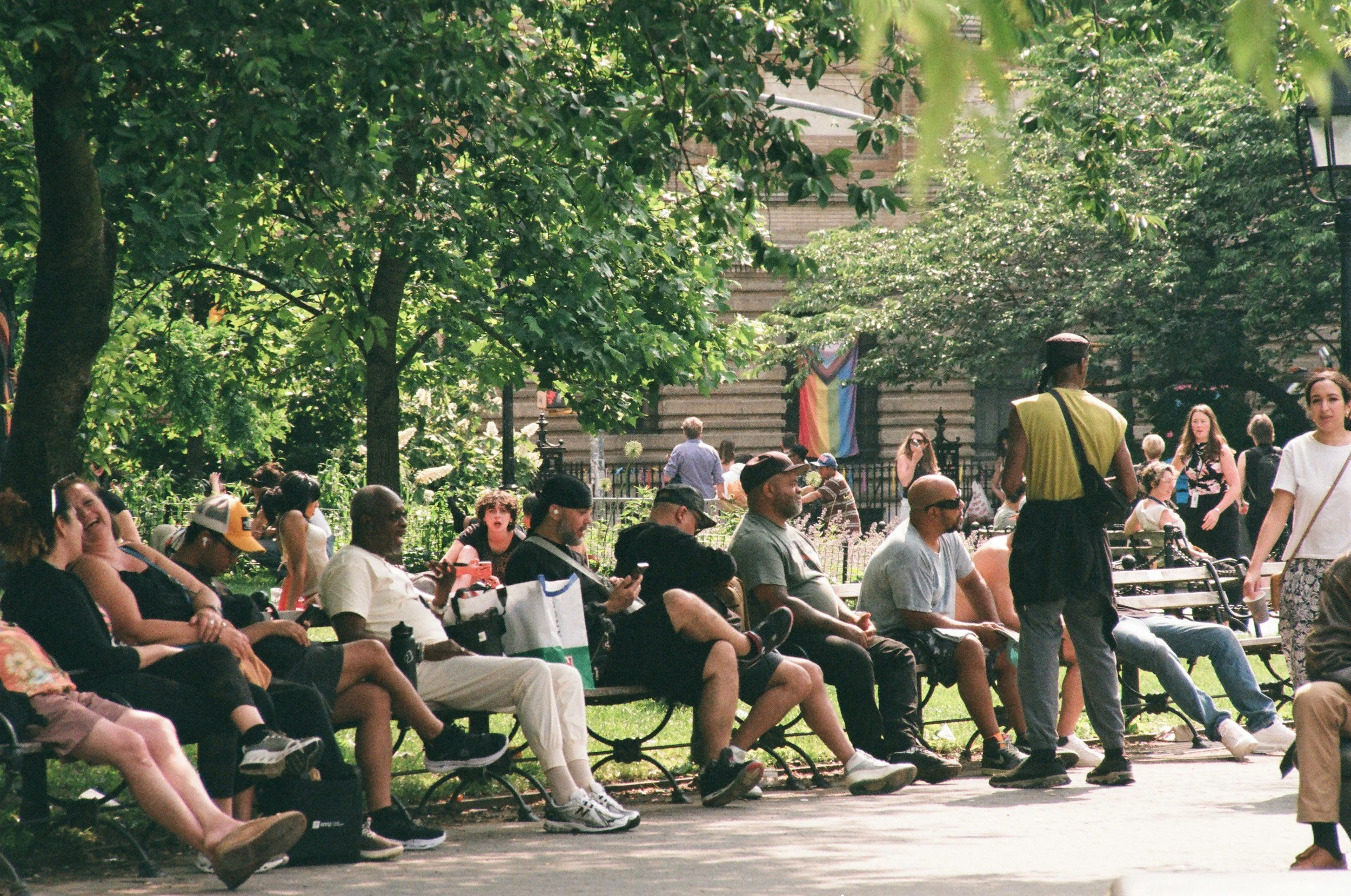
I'm interested in how our inner lives are shaped by the worlds we inhabit. Family, culture, gender, race, disability, economic circumstances, and experiences with institutions can all affect how we understand ourselves and what feels possible.
My background in community organizing and social justice research has made me attentive to the ways individual issues can be connected to larger systems. As a queer, nonbinary white person, my commitment is to ongoing learning, cultural humility, and a therapeutic relationship in which your perspective, values, and goals genuinely matter.
Let’s connect!
Send me a quick note, and we’ll set up a time to chat.